Give and take

by Vivienne Baillie Gerritsen

Survival is the essence of life. This may sound like an abysmal platitude but, in the living world, the act of survival implies an awful lot. To survive, many animals eat other animals, which they must first kill. Birds swallow seeds thus depriving them of a chance to grow into plants. Fungi destroy crops as they use them for their own reproduction. So life, or survival, is also strongly associated with death. A lot is going on at the molecular level too, where myriads of pathways are set into action as a response to nutrition, to infection or to a predator's attack. Plants are intriguing in that their survival cannot depend on mobility: they are unable to flee predators or infection, and quite unfitted to run after prey. Their survival depends on how their stems and leaves develop and move to catch sunlight, for instance, as well as on their means to fight off pathogens. For this, they may even benefit from the help of another species. One example has been described between poplar trees and fungi, in particular the fungus Trichoderma asperellum. T.asperellum, like all fungi, expresses small proteins known as hydrophobins which have a role in fungal growth and defence. One of these hydrophobins, HFB2-6, can prompt poplar signalling pathways that are crucial for the tree's own growth and defence.

Protein Spotlight (ISSN 1424-4721) is a monthly review written by the Swiss-Prot team of the SIB Swiss Institute of Bioinformatics. Spotlight articles describe a specific protein or family of proteins on an informal tone. Follow us: Subscribe · Facebook · Linkedin

More from Protein Spotlight

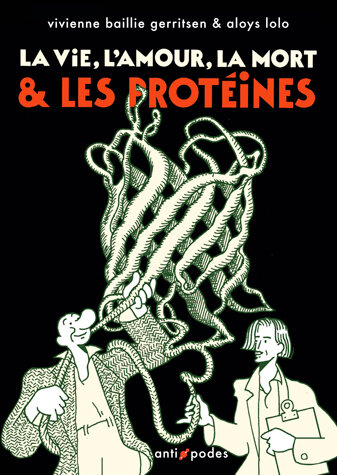
LIFE, LOVE, DEATH & PROTEINS

La vie etc. cover

"La vie, l'amour, la mort & les protéines" (in French only) is a wonderful and unique collection of twenty comic strips created with cartoonist aloys lolo. Each comic describes one protein taken from the Protein Spotlight articles. The album was published in November 2023 by Antipodes, Switzerland. Order your copy online. English version online here.

Snapshot : Sonic hedgehog protein

Animals have such a keen sense of smell that in most instances they are literally led by their noses. In humans, however, such a sense seems to be more of a luxury than a necessity. Despite this, the mechanisms underlying human olfactory perception have been under close scrutiny for decades. Indeed, one part of our brain – the olfactive bulb – which is in effect the relay between our nose and our brain happens to be supplied with brand-new neurons on a daily basis.

A little bit of praise!

“I recently stumbled upon your columns. Let me congratulate you on achieving the near impossible, for your articles have enabled me to successfully marry IT with the Life Sciences and better explain the concepts of bioinformatics to those who are not in the know of the field.

Your articles are very well written, lucid, and contain just enough information to excite the reader to want to learn more about the topic being discussed. They fall in a very rare category where they are accessible to everyone, from the undergraduate students to research students who want to have a basic idea of the topics being discussed. Some of your articles, like "Our hollow architecture" and "Throb" are outstanding pieces.

I would highly recommend your articles as a necessary reading in undergrad classes to get students inspired about the various avenues of research.”

— Rohan Chaubal, Senior Researcher in Genomics

Thank you to Alison Deegan whose work we reproduce on our site!